
What is cauliflower ear?
Also known as a perichondral hematoma, cauliflower ear is an irreversible deformity caused by the formation of scar tissue and contraction of the perichondrium which occurs after a separation of the ear cartilage from the underlying connective tissue.
The pinna is the outer part of the ear that acts as a funnel to direct sound further into the ear and is made up of three layers:
- Cartilage plate: The innermost layer of the pinna provides shape and rigidity. Unlike other tissues, the cartilage cannot heal itself when damaged.
- Perichondrium: A protective layer of connective tissue that provides the blood supply and nutrients to the cartilage. The underlying cartilage and the overlying skin are both firmly attached to the perichondrium.
- Skin: The outermost layer of skin that is covered with short hairs on the outside.
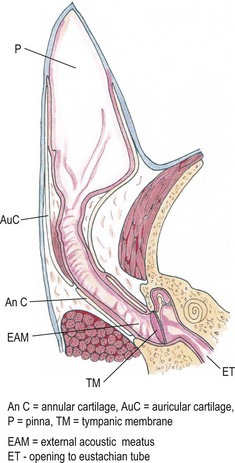
As the cat scratches the ear or shakes the head (head shaking is more common in floppy-eared dogs), the perichondrium separates from the cartilage which creates space. The perichondrium blood vessels rupture and blood pools in the pocket-forming a hematoma. This build-up of blood between the perichondrium and cartilage can interrupt the blood and oxygen supply to the cartilage causing necrosis.
The distortion of the pinna, which becomes hard and cauliflower-shaped (hence the name) is thought to be due to a combination of factors which include myofibroblastic contraction of the maturing granulation tissue, excess cartilaginous tissue (preexisting and newly formed), and the separated perichondrium retracts and acts as a bowstring, gradually folding back the cartilage.