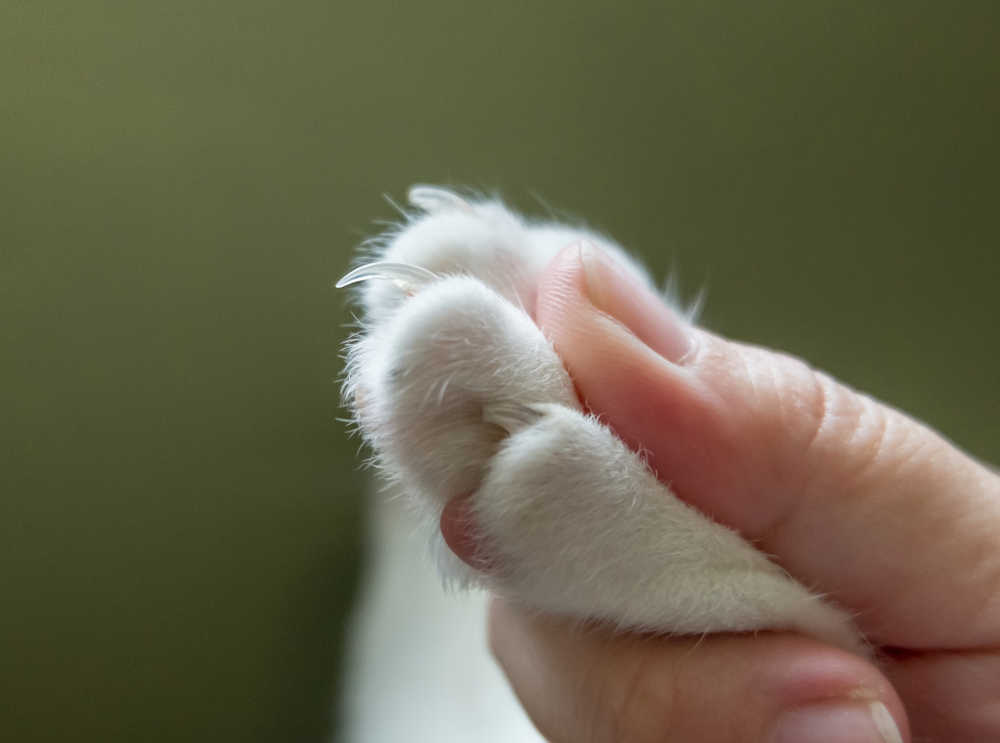
One of our veterinarians here at Cat World, Dr. Sara Ochoa says, “One of the main reasons that cat’s nails will split is that they are not sharpening their claws as they should. It is natural for a cat to want to use a scratching post or scratch their claw on things. Many times, this is your furniture unless you provide them with something. Older cats tend not to use their claws and do not sharpen them. This can cause the nails to split. Nutrition also plays a big role in your cat’s nails. If your cat is not eating a proper diet, their nails can split.”
Why are my cat’s nails splitting?
It can be frightening to see your cat’s nails splitting or even parts falling off! But don’t worry—in most cases, it’s a natural process, like how our nails may break.
Your nails may split due to:
- Broken Nail: We’re starting with the one that may be the most urgent. If your kitten has broken a nail, you will need to seek medical attention to ensure no issues are causing it. Additionally, seek advice below on determining whether the nail is broken or not and how to address the problem.
- Unhealthy: A diseased claw can be a symptom of an underlying issue. Diseased nails could also include excessive paw licking, limping, pain, no scratching, etc. If you have ruled out other issues, there could be an issue that isn’t visible. Contact your veterinarian for further advice.
- Disorders: Cats have two main nail and nail bed disorders: onychorrhexis and onychomadesis. Onychorrhexis is when cats may have extremely brittle nails. Onychomadesis presents when nails separate, peel, and slough excessively. These contain similar symptoms to cats with unhealthy nails. Additionally, it’s hard to nail down the cause of a nail disorder without a veterinarian assistant. Causes can include infection, fungus, trauma, immune issues, etc. If you suspect a nail or nail bed disorder, schedule an appointment.
- Age: Like the two nail disorders, older cats can suffer from brittle or tougher nails as they age. Senior cats’ claws grow thicker than younger cats and have increased issues. Elder cats may have underlying health conditions such as arthritis, making them harder to use scratching posts.
- Nail Clippers: The most common nail clippers are guillotine-type, scissors cut, and human nail clippers. The guillotine and human nail clippers are the easiest to use. The problem with nail clippers is under consistent use; they grow dull, just like our nails or scissors do. If your cat’s clippers are blunt, they tend to crush the nail rather than cut it, which increases the likelihood of nail splitting.
- Trimming Technique: If you use guillotine-type clippers, you may be hurting your kitten by doing it wrong. There are two sides, and it’s not always clear where to put the claw. Ensure the cutting blade angle lines up with the direction of the cats’ claws. This will reduce crushing the nail rather than cutting it.
- Shedding: The least severe reason your cat’s nails may be splitting is they’re simply shedding. While our nails grow and grow until we either break or cut them, cats are different. When the kitten scratches furniture or posts, it helps the claws grow. As they grow, the top layer splits to allow room for the new one. It’s very similar to a snake shedding its old skin. If you’ve ruled out other issues, it’s normal.
Tips to trim your cat’s nails safely
Dr. Ochoa recommends, “When trimming your cat’s nails, it is best to have help. Place your cat on top of a slick surface such as a counter. Gently press on each toe and extract the toenail. Trim off just the sharp tip. Do not try to over trim these nails. At first, your cat may only tolerate just a few nails. Working with them a little each day until you have all their nails trimmed.”
It’s a process to start cutting your cat’s nails, but it also requires the right tools. As stated, the three main types of nail clippers are:
- Guillotine-type: These have a sliding blade, which you can change the position of to decide how much you want to cut off.
- Scissors: These resemble kid scissors, which have large grips and a dent to place the nail inside. The amount of nail to be cut is determined by the position of the nail clippers.
- Human Clippers: We’re familiar with these already, but you also control how much nail is cut here.
Use the clipper, which works right for your situation. To ensure they don’t cut too much, beginners may feel more comfortable with the guillotine-type blade.
There are two parts of a cat’s nail: the quick and the nail. The nail is the visible white part that peeks out when they are scratching or playing. The quick is the pink part which may only be visible when looking closely or cutting nails. The claws’ nail is where the blood supply is, which gives it the pink color. If you cut this part of the nail, it’s too far and may bleed. It can be painful, too.
It can be scary to cut your cats’ nails for the first time. There’s a lot of pressure to get it right. If you don’t feel ready, you can contact a professional to do it for you. Some professionals offer tutorials to ensure you are doing it correctly.
Tips to keep a cat’s nail splitting to a minimum
Dr. Ochoa responds, “If your cat’s nails are splitting, making sure you give them frequent nail trims will help. Eventually, these nails will return to normal and not split. Ensure that your cat is eating a proper diet and provide them a scratching post to help keep their nails sharp.”
After ruling out other issues, splintering or splitting is a natural process. However, there are tips to keep the risk to a minimum.
Ensure you are providing enough scratching places for your cat. Cats’ claws are one of their most prominent features, the equivalent of our fingers. If we want them to grow successfully, cat safe scratching is needed.
Cats have different preferences on the material or scratching post. Most posts found in stores are tightly woven, but some cats prefer a looser natural Additionally, cats want to leave a visual mark when scratching as a natural predator. Cardboard, carpet, wood, and more function this way.
It’s recommended to have one scratching post per cat plus one. It’s essential to have these positioned in different locations.
Ensuring your cat has the proper resources and the correct trimming technique, your cat’s claws will be the healthiest they ever have.
Are broken nails the same as nail splitting?
While it doesn’t seem like a broken nail could cause intense pain, have you ever experienced a hangnail or a papercut? Pain isn’t always comparable to the size of the injury. Kitten nails are their version of human fingers. Therefore, a broken nail is more equitable to a broken finger for a human.
There is a high supply of blood to the base of the nail (the quick); one sign of a broken nail is bleeding. The problem is cats are experts at hiding pain, so we must look for outward signs or changes in their behavior.
The primary signs of a broken nail are limping, meowing, not wanting to walk, etc. Bottom line—it’s difficult and painful to walk on a broken nail.
A frayed nail looks like a splitting one, but there is one difference. The amount of fraying or splitting. When a nail splits due to natural causes, it tends to be minor. When it frays, there is more. It could split in multiple directions or multiple places.
What should I do if my cat breaks a nail?
It’s not fun to encounter your cat yelping or limping; we don’t want our pets to be in pain. If you have any concerns, you should check their foot for a broken nail.
- Restraint: The best method to treat your cat’s broken nail uses two people. It makes the process easier—one to hold the pet, and the other tends to the damaged nail. Have someone restrain your cat. The best way to secure a cat in this situation is to use a towel. You will wrap the cat in the towel, leaving the suspected paw outside the restraint. Have your friend apply moderate pressure, so it’s snug. You’re making a kitten burrito.
- Control: If your cat is bleeding, we need to control it. Wrap the foot in gauze or towel and apply pressure to the toe. If it doesn’t stop bleeding within 10 minutes, you should apply a cauterizing powder to stop the bleeding. Another solution is to cover the nail with baking powder or flour. Additionally, sticking the nail in a bar of soap could help stop the bleeding.
- Remove: If there is a broken nail, it needs to be removed. This should only be done at home if it’s loosely attached and easily reached. Other than that, contact a veterinarian. The vet will ensure the nail is trimmed above the break to provide a fine foundation to regrow.
- Protect: Cat nails are attached to the bone, so preventing infections is necessary. Your vet should apply ointment to the nail or provide an antibiotic.
- Aftermath: Ensure you closely monitor your pet for the few days following the removal of the break. Ideally, your vet will schedule a follow-up to examine the area. Additionally, it’s essential to control the pain and limit your cat’s movement. Without the keratin, the blood vessels and nerves are exposed.
FAQs
Who should cut a cat’s nails?
A vet, groomer, or owner can cut your cat’s nails. If you have researched the technique and feel comfortable, do it. If not, you can seek the help of a professional who may show you how to do it.
Why do my cat’s nails keep splitting?
Your cat’s nails may be splitting due to old age, illness, or nature. Keep an eye for negative symptoms, and if you are concerned, seek help from a vet.
How do I stop my cat’s nails from splitting?
Keep your cat’s nails from splitting by cutting them regularly, providing scratching posts, and keeping a good trimming technique.
How do you treat brittle nails in cats?
While it’s best to seek a vet’s opinion, you can use a biotin treatment to help strengthen your cat’s nails.
Why do my cat’s claws shed, and what should I do?
Your cat’s claws shedding is natural if you have ruled out underlying causes. It’s a result of their claws growing regularly, and the old one needs to move to make way for the new nail.
How do you treat a cat’s split nail?
If the nail is attached, do not move it. If it’s completely gone or bleeding, apply pressure to an absorbent substance until it subsides. You can soak the foot in warm water and Epsom salt baths twice a day.
Why do some cats’ nails shed often, and how often is “normal” for shedding claws?
Like us, cats vary in how fast their nails grow. Theirs happen to shed, which may be alarming. Each claw discards the outer sheath every two to three months.
When to see a vet?
See a vet if you notice any adverse symptoms such as licking paws excessively, crying or whining, limping, pain, etc. These can clue you into an underlying issue.
How long does it take for a cat’s nail to heal?
If there are no issues with slow healing, a new toenail takes a few months to grow back.
Authors
-
by
-

-